Research on Neurodegeneration in Down Syndrome
Pioneer Research Institute
06/2026 - 09/2026
Tracing the Spark: Can Prenatal Infections Accelerate Alzheimer’s in Down Syndrome?
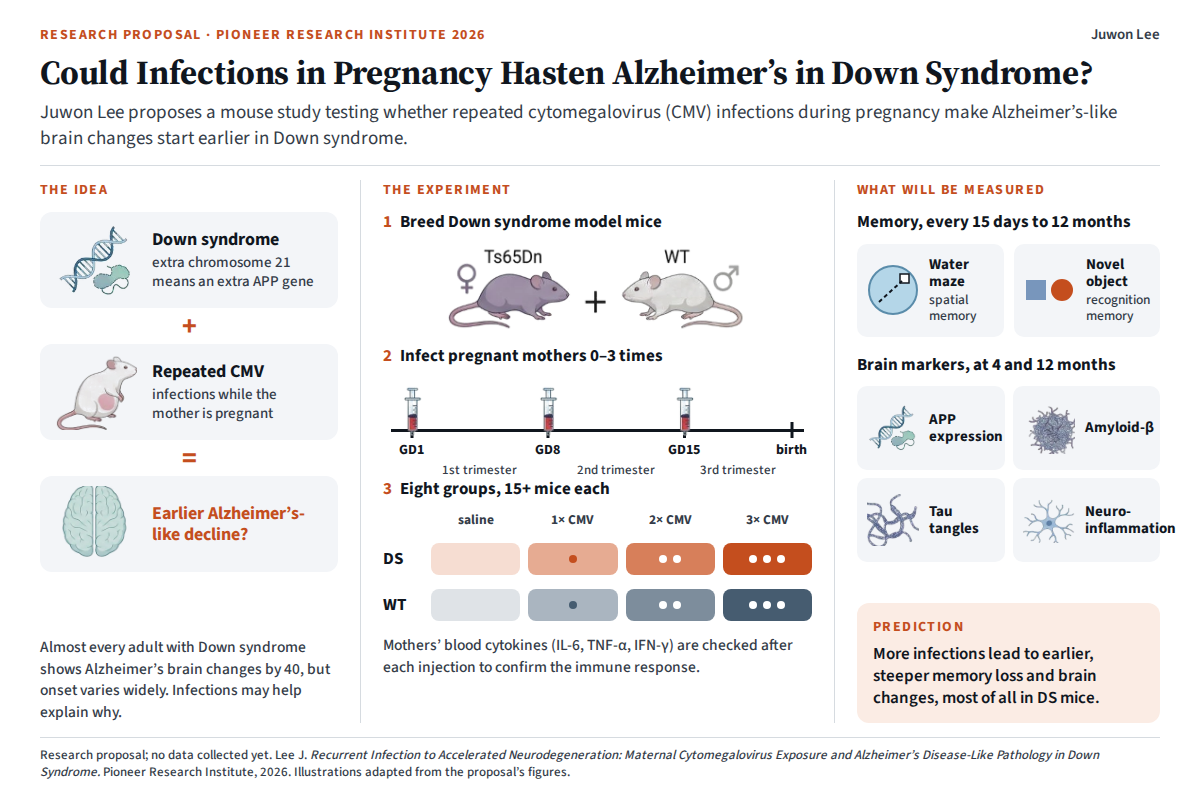
Individuals with Down syndrome (DS) possess a near-universal genetic vulnerability to Alzheimer’s disease (AD)-like neurodegeneration due to chromosome 21 triplication and amyloid precursor protein (APP) overexpression. While almost all adults with DS exhibit hallmark plaques and tangles by age 40, the onset of clinical dementia varies widely, strongly implicating environmental modifiers such as chronic immune dysfunction and early-life infections.
To investigate this gene-environment interplay, our research examines whether recurrent maternal exposure to cytomegalovirus (CMV)—the most common congenital infection—accelerates neurodegenerative onset in the Ts65Dn mouse model. By modeling gestational viral burden through maternal immune activation, we systematically evaluate its impact on cognitive decline, amyloid deposition, and persistent neuroinflammation.
This study aims to identify modifiable environmental triggers and reveal actionable intervention windows to delay neurodegeneration in genetically susceptible populations.