Research on Circadian Rhythm and DNA Damage
Johns Hopkins School of Medicine, Institute of Cell Engineering
08/2025 ~ 02/2026
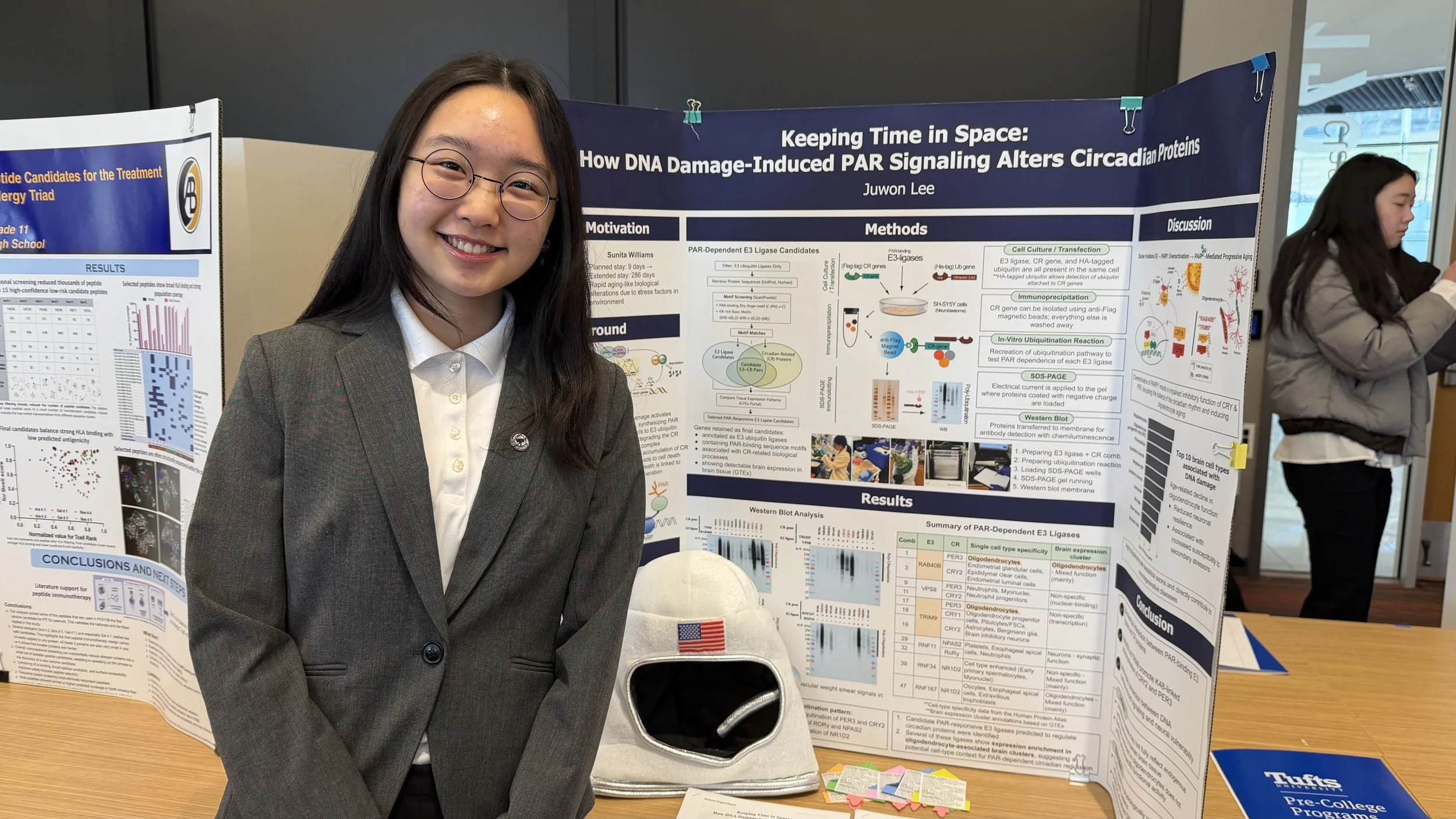
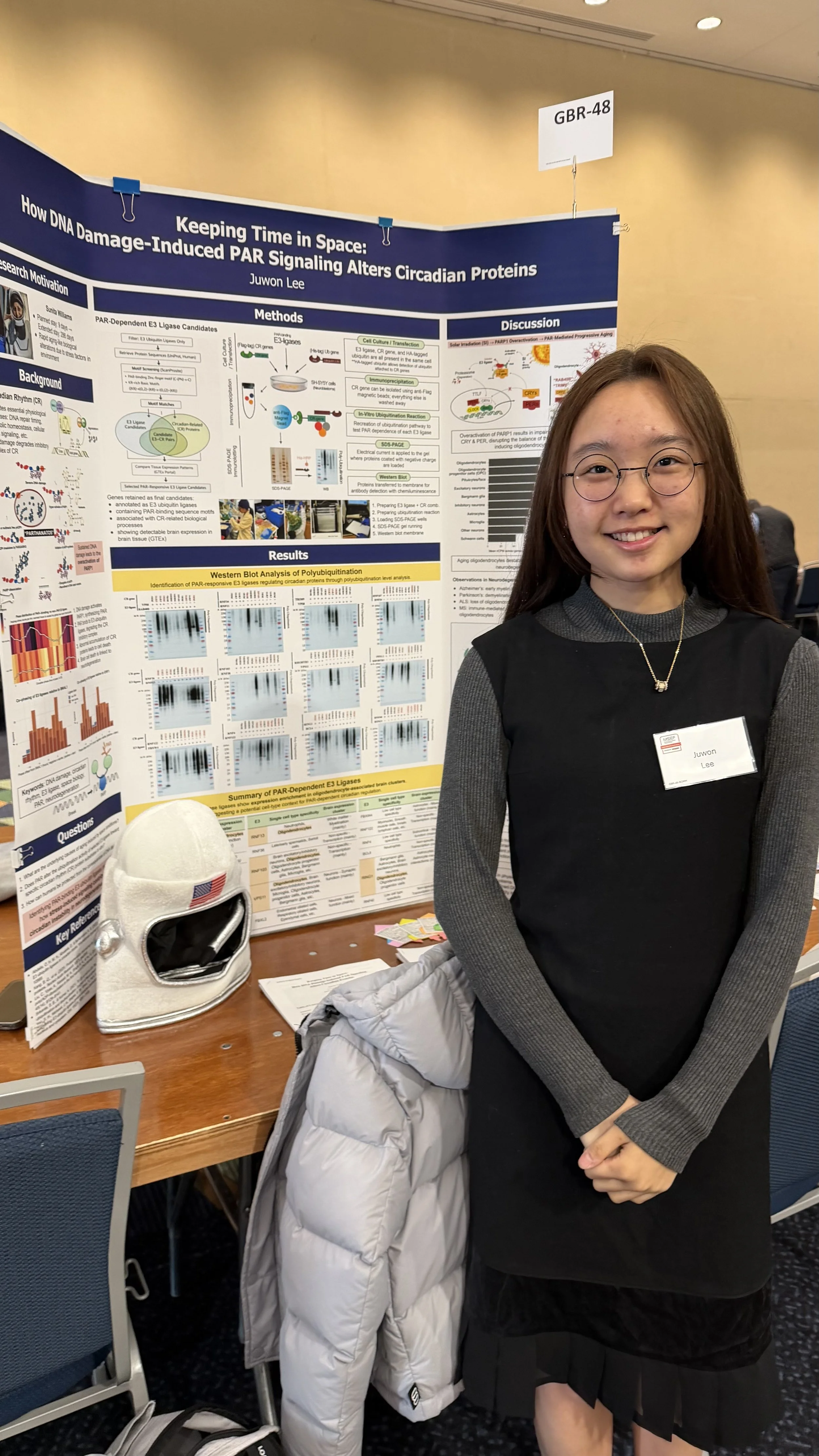
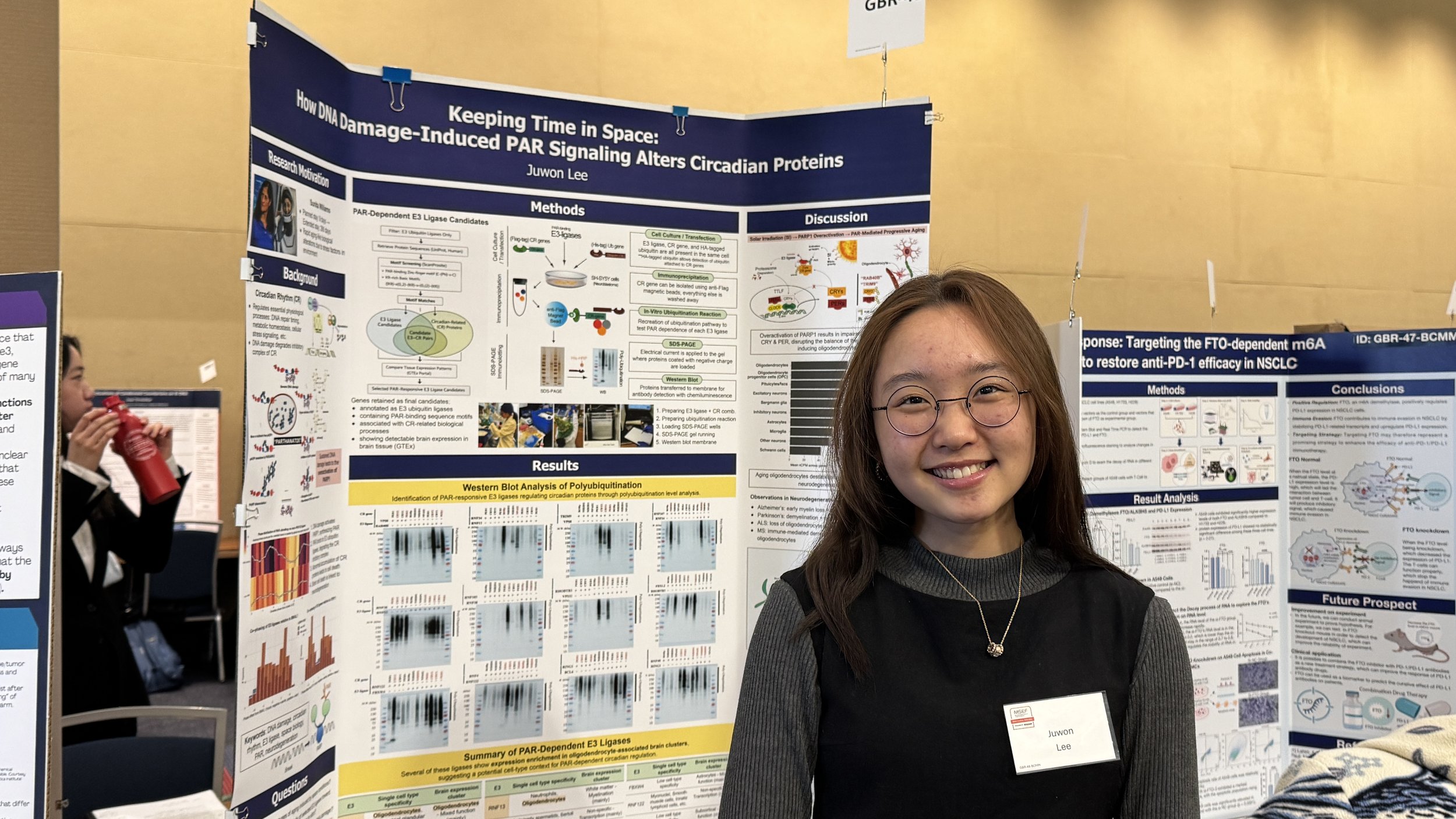
Keeping Time in Space: How DNA Damage Alters Circadian Clock Proteins
Inspired by the striking physiological changes observed in astronauts after long-duration spaceflight, this study investigates the molecular link between deep-space environmental stress and circadian rhythm breakdown.
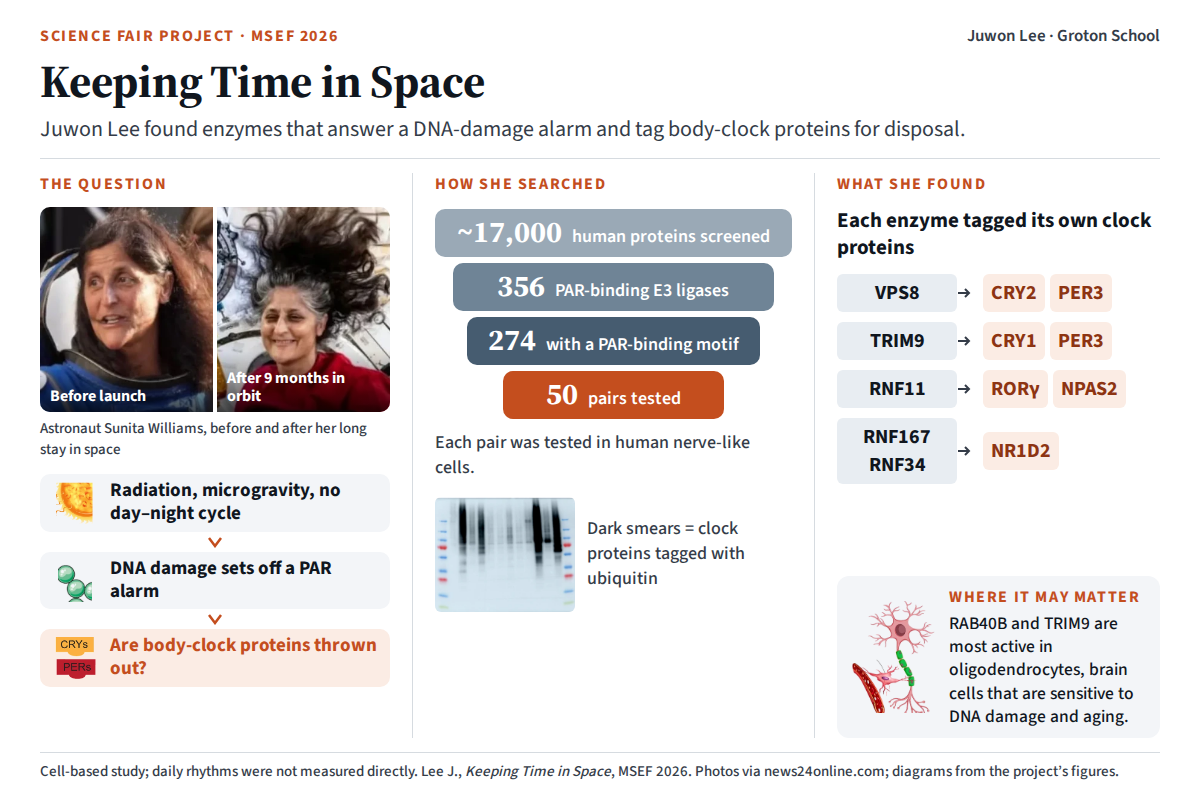
Cosmic radiation, microgravity, and disrupted light cycles trigger severe DNA damage, activating PARP1 to synthesize poly(ADP-ribose) (PAR) signaling polymers, while circadian stability strictly relies on E3 ubiquitin ligases to govern clock protein degradation. Despite the vital roles of both systems, the direct biochemical mechanism linking stress-induced PAR signaling to circadian protein turnover remains largely uncharacterized.
To uncover this interface, I screened human proteomic datasets and identified candidate PAR-binding E3 ligases containing a novel zinc-finger motif. Biochemical assays confirmed that these ligases selectively modulate circadian regulators: TRIM9 and VPS8 drive poly-ubiquitination of core clock repressors (PER3, CRY1/2), whereas ligases such as RNF11 and RNF167 target secondary regulators like RORγ, NPAS2, and NR1D2.
Notably enriched in stress-sensitive oligodendrocytes, these ligases represent a previously unrecognized molecular bridge between genomic stress signaling and the biological clock, providing fresh insight into cellular aging and neural vulnerability.
Poster Presentation
Research Paper & Notebook